Octopus Bloom in UK Seas: Good or Bad?
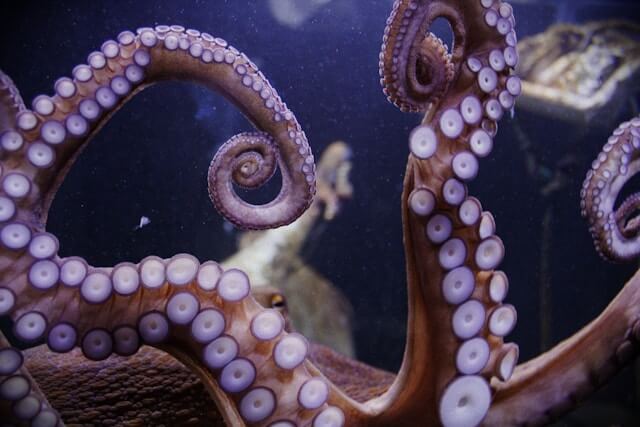
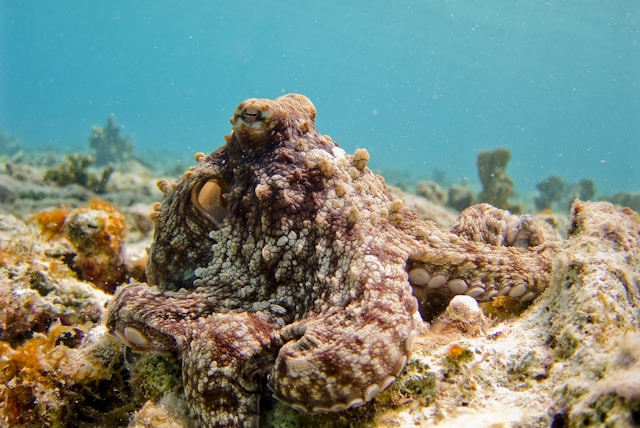
Along the rocky coasts of Devon, Cornwall and the wider South West of England, the seas have been alive with a spectacle rarely seen in living memory: a bloom of common octopus (Octopus vulgaris).
The dramatic rise in numbers is so pronounced that it’s reshaping marine food webs, fishing livelihoods and even conversations about our warming oceans.
But how should we feel about it? Is this a win for biodiversity or a climate concern?
What Is the Octopus Bloom?
The common octopus (Octopus vulgaris) is native to the UK. However, its usual range lies further south around the Mediterranean. In 2025 and early 2026, sightings and catches of octopus off the southwest coast surged beyond anything seen for 75 years.
A recent report from Plymouth Marine Laboratories confirmed anecdotal evidence from divers and fishermen, using data from fisheries landings, scientific surveys and citizen science in their assessment.
Why Is This Happening?
There’s strong evidence that climate change is leading to warming in the seas around the UK. It’s widely believed that this lies at the heart of this phenomenon.
Recent sea temperatures off the south-west coast have been consistently above average. This has created conditions more like those further south where the common octopus thrives. These warm waters boost reproduction and lead to high survival rates and faster growth for juveniles.
There’s also evidence that changing patterns in currents may have carried octopus larvae northward from populations around France and the Channel Islands, helping spark blooms in UK coastal waters.
These blooms aren’t entirely new. Records suggest similar rises occurred in 1900. All of these also coincided with warming water temperatures, further confirming suspected links to warming oceans.
Is the Octopus Bloom a Win for Biodiversity?
In the public eye
One of my least favourite conversations to have is with people who claim there’s no interesting wildlife in the UK. On the surface, this news story, showing an abundance of fascinating megafauna just off our shores, feels like a win.
For local snorkelers, divers and nature enthusiasts, the sights have been remarkable- octopus mating, hunting and even interacting with underwater cameras. The videos have been doing the rounds on social media.
This eight-armed visitor has no doubt stirred public interest in marine life. We are increasingly disconnected from nature, and anything with the power to engage the public is important.
An Unexpected Windfall for Some
Octopus fetch good prices, so many fishing crews have taken the opportunity to start targeting the unexpected abundance of octopus in their catch. For some, this translated into significant income and an unexpected asset to their business.
In fact, the number of octopus caught on the South West coast last year reportedly amounted to 65 times that of previous years!
On the Flip Side
Not All Fishers Benefited
Unfortunately, the story isn’t so rosy for everyone.
It seems we shared a taste for the same seafood as the octopus. That means those whose livelihoods depend on crab, lobster and scallop have seen their catches decline sharply by 30-50% due to predation by the voracious octopus.
The hunt for octopus brought short-term income for some boats, but the collapse in shellfish stocks and the potential long-term changes to inshore ecosystems present real concerns for sustainability and food security.
Reshuffling the Ecosystem
Octopus are active predators. Their rising numbers can alter food webs, eating shellfish and competing with other predators. This reshaping can end up reshaping entire ecosystems which we depend on for food and income from tourism.
Ultimately, it’s important to bear in mind that this is yet another sign of our shifting climate, the outcomes of which are likely to be unpredictable. These changes are happening at speeds that evolution cannot keep up with, and for every winner, there will be losers as well.
Will the Octopus Bloom Continue?
The report from PML strongly suggests that our warming waters make it likely that this will happen again.
Monitoring and data collection will be required to make future predictions to support fisheries and ecosystems.
It’s likely that some adaptation will be necessary but there are always opportunities to be found.
One Wild Thing You Can Do
Even if you don’t live by the coast or fish for a living, this story matters.
Food systems are changing. What we eat and how seafood is caught is being reshaped by environmental change. This bloom is one of many ways global warming is showing up in our communities.
Humans and nature are connected. When marine ecosystems change, it affects jobs, culture and coastal ways of life. The octopus bloom is a vivid reminder that the ocean isn’t distant- it’s intimately tied to the climate and economies we all depend on.
The One Wild Thing you can do is to open your mind to new foods. Maybe one day you’ll find octopus on your plate. Maybe it’ll be another expected new species that is dominating our waters. Either way, it’s time to stop relying on the status quo and get ready to go with the flow (cheesy rhyme unintentional).


You May Also Like
Human Disconnection with Nature: Why It’s Hard to Care
How Can Invasive Species Be Controlled at Home?