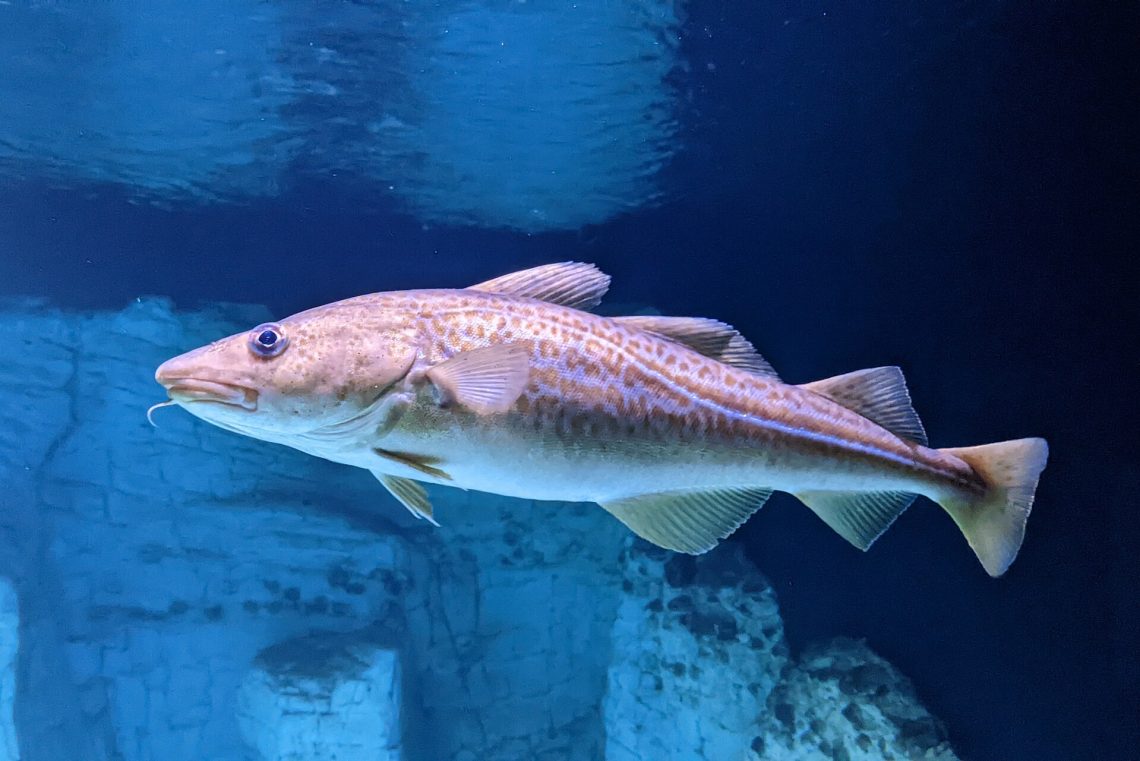
British Cod: The Race Against Time to Save an Icon
Is there any bigger icon in British cuisine than fish and chips?
Many of us Brits love tucking into a juicy piece of paper-wrapped battered cod and vinegar-saturated chunky chips.
In April 2026, the Marine Conservation Society updated their Good Fish Guide, demoting ALL British cod stocks to a red rating. These stocks are now so depleted that we should avoid them completely.
Can this Great British tradition hold up in a world of decimated cod stocks, and what might our orders at the chippy look like instead?
A Brief Post-Mortem
This has been a long time coming.
British cod didn’t collapse overnight. It collapsed in slow motion, over decades, while the warning signs were largely ignored.
Our largest cod stock is found in the North Sea. Population collapse led to the establishing of the cod recovery plan in 2004, which did see populations start to recovery. However, at the first glimpse of recovery, many of the measures were reversed and the stock has fallen back into decline.
Last September, the International Council for the Exploration of the Sea (ICES), the body that advises governments on fish stocks, recommended zero catches across the North Sea and adjacent waters for 2026.
The UK government negotiated a 44% cut instead.
The red listing is the MCS formally recording what the science has been saying for years: there are no viable cod populations left in UK waters.
What Is a “Viable” Population and Can We Get It Back?
When scientists talk about a “viable” population, they don’t just mean there are some fish left.
A viable population means there are enough fish, of the right ages, in the right densities to reliably reproduce and sustain themselves over time.
Cod need to reach a certain density to find mates. Below that threshold, the population becomes too sparse to recover, even if fishing stops completely. Several British stocks are at, or about to reach, this tipping point.
Even when adult cod do spawn, their larvae need to survive. Cod are a cold-water species and, with warming water temperatures, British waters are now at the edge of their comfort zone. Fewer juveniles survive, and even fewer make it to reproductive age themselves.
We have seen recovery before. The bounce-back seen in Norwegian and Icelandic cod stocks reassures us that it IS possible to restore a depleted population.
But it’s going to be an uphill battle.
Both successes required strict regulation over long periods of time. We’re talking decades.
In this time, income from cod fisheries will decline and availability of cod to the British public could suffer. This makes it extremely hard to get buy-in from governments elected on 5 year cycles, and even harder to sustain it across successive governments.
Fast-moving economies find it hard to accept short term losses, even if it means long term gain.
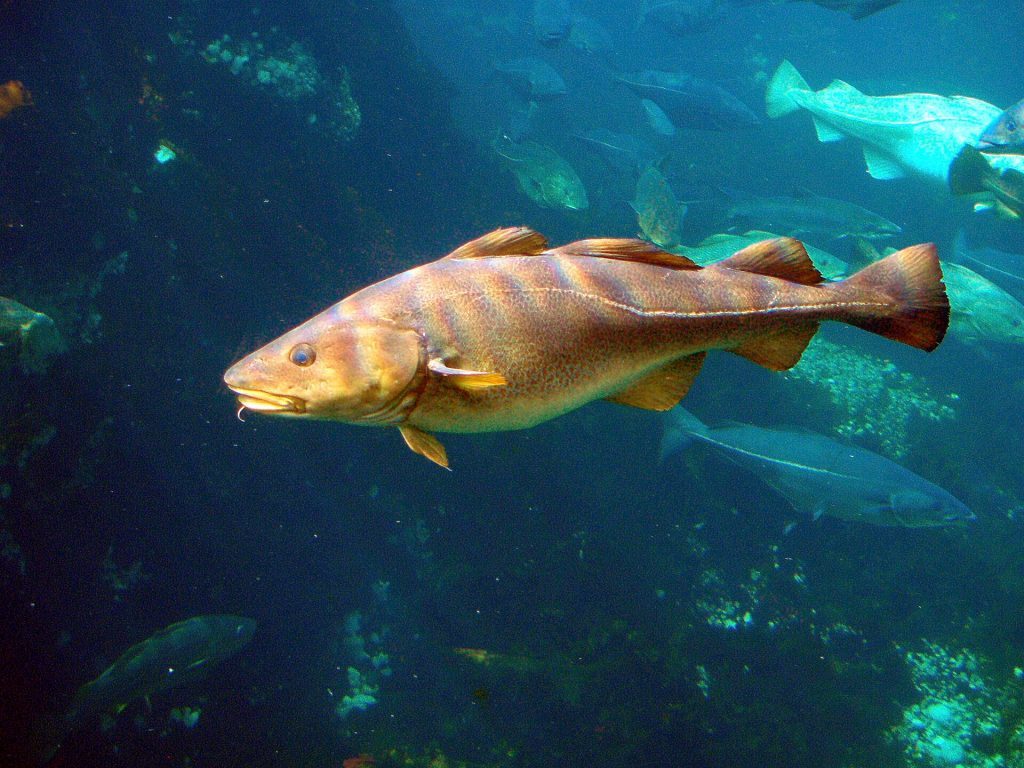
British Cod Collapse Isn’t a Failure of Conservation
We have all of the knowledge and all of the tools to prevent cod collapse.
What we lack is the buy-in required to make the change that is so urgently needed.
Perhaps this is actually a failure of communication.
Fish stock collapse is rarely headline worthy. For animals whose full existence is out of sight and out of mind, gaining public support for their protection is extremely challenging.
How much of the general public is even aware of the scale of the issue?
Perhaps this move by the Marine Conservation Society, to red list one of our most iconic species and a staple of British culture, might help to shift the needle in the right direction.
What Can We Eat Instead?
Fishing is a vital part of our economy, and long-held way of life for many British communities.
It’s important that that those trying to make an honest living from our seas and feed our growing population are not left to pick up the blame.
The good news is that we all have the power to support our fisheries . We can incentivise changes to the way species are caught simply through the choices we make in buying fish.
When it comes to cod, the MCS recommends European hake as the closest like-for-like swap- flaky, white, versatile, and currently well-managed.
Alternatively, Icelandic cod remains a “best choice” on the Good Fish Guide. If you want cod specifically, this is your best option. Iceland’s fisheries management has a significantly better track record than ours.
MSC-certified haddock from the North Sea or West of Scotland is another strong choice. And if you’re open to branching out, pouting, coley and pollack are all cod relatives that are underutilised, affordable, and sustainably caught in UK waters.
One Wild Thing
The good news is you don’t have to sacrifice your Friday night trip to the chippy forever.
But we probably do need to get a bit more clued up on the alternative options available.
Simply asking where cod has been sourced from and turning down a British stock can make a world of difference if enough people make that choice.
If the cod option is British, why not ask what alternatives are available, and consider branching out to try something new?
It might feel like a small thing, but consumer demand genuinely shapes what gets stocked. It alters what gets ordered, and ultimately what gets fished.
Individual choices don’t fix systemic problems on their own. But a chip shop that starts fielding questions about sustainability is one that might start thinking about it too. If enough of us make the switch, it sends a signal that the market is ready to move, which gives the fish a fighting chance to come back.
British cod isn’t gone forever. It’s just off the menu for now. The question is whether we give it long enough to find its way back.

You May Also Like
Animals of Instagram: The Growing Exotic Pet Trade
A Day Out At the Virtual Reality Zoo